
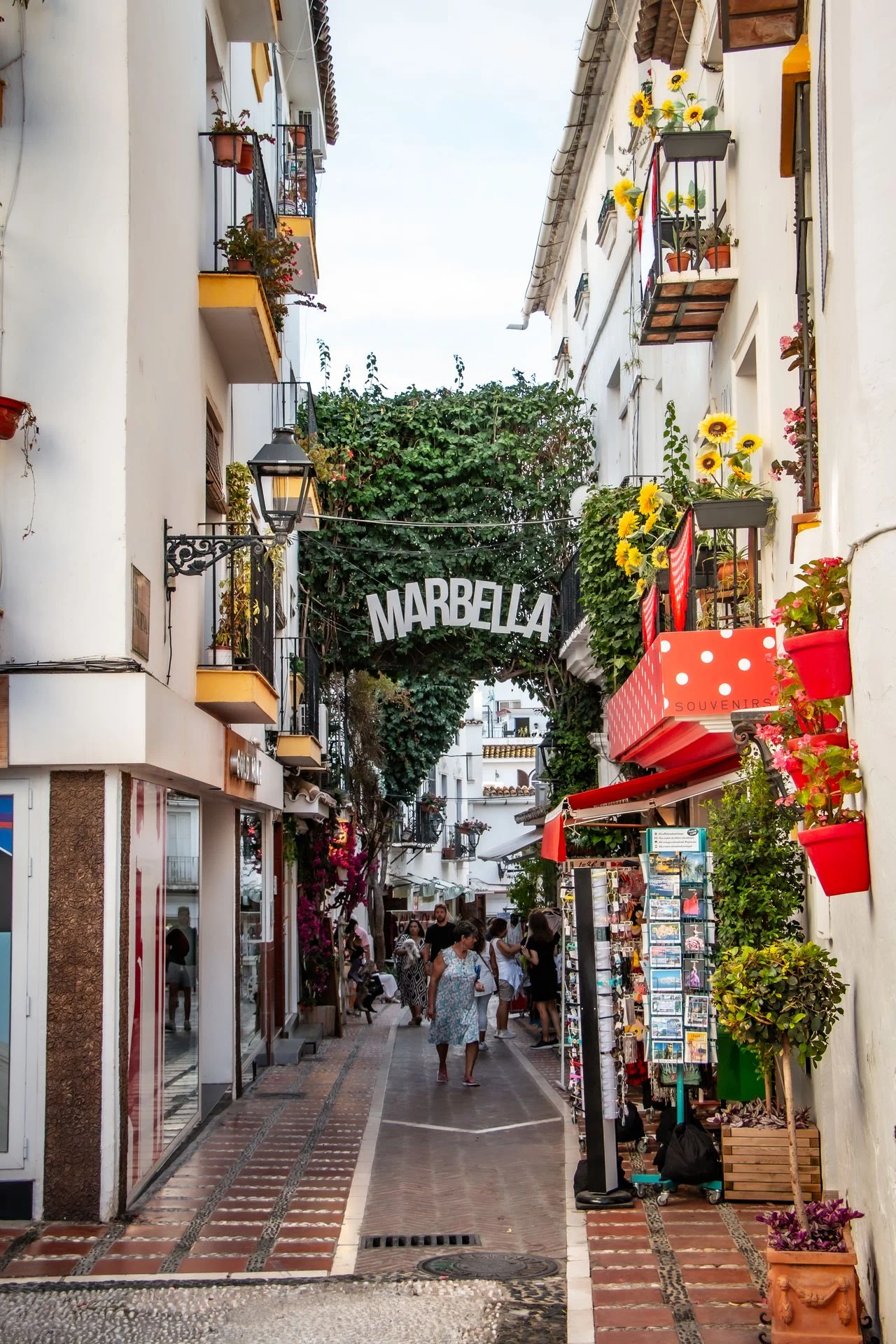
Ten Great Day Trips from Marbella: A Local Guide
Guide to Marbella · 6 de septiembre de 2026
En esta guía
The best day trips from Marbella range from the clifftop gorge of Ronda and the whitewashed alleys of Casares to the world-class museums of Málaga and the Atlantic sands of Tarifa. Most destinations sit within a 45- to 90-minute drive along the AP-7 toll road or the scenic A-397 mountain highway, making Marbella an exceptional base for exploring Andalucía.
# Ten Great Day Trips from Marbella: A Local Guide
While Marbella offers golden sand beaches, lively dining spots, and historic charm, its location on the Costa del Sol makes it an ideal launching pad for exploring southern Spain. Within an hour or two by car or public transport, you can transition from Mediterranean beach clubs to dramatic limestone gorges, unspoilt Atlantic dunes, Moorish citadels, and peaceful mountain villages.
Planning successful marbella day trips comes down to understanding seasonal traffic, summer heat, and mountain topography. When you want a break from the classic top things to do in Marbella, these ten itineraries showcase the very best of the surrounding region.
| Destination | Distance from Marbella (km) | Typical Driving Time | Altitude (m above sea level) | Municipal Population (INE) | Mean Summer Max Temp (AEMET) | Primary Access Route |
|---|---|---|---|---|---|---|
| Ojén & Juanar | 15 km | 20–25 min | 300–850 m | ~4,480 | 30.5 °C | A-355 |
| Estepona | 27 km | 25–30 min | 18 m | ~77,000 | 29.8 °C | A-7 / AP-7 |
| Mijas Pueblo | 35 km | 30–35 min | 428 m | ~91,000 (municipality) | 31.2 °C | AP-7 |
| Casares | 45 km | 45 min | 435 m | ~8,100 | 31.0 °C | A-7 & MA-8300 |
| Málaga City | 60 km | 45–55 min | 11 m | ~586,000 | 31.8 °C | AP-7 / MA-20 |
| Ronda | 63 km | 60–75 min | 739 m | ~33,400 | 34.5 °C | A-397 |
| Gibraltar | 65 km | 50–60 min | 0–426 m | ~34,000 | 28.5 °C | AP-7 to La Línea |
| Caminito del Rey | 70 km | 75 min | 280–450 m | N/A (Álora / Ardales) | 35.0 °C | A-357 & MA-5403 |
| Tarifa & Bolonia | 105 km | 75–90 min | 7 m | ~18,600 | 26.2 °C | AP-7 & N-340 |
| Granada (Alhambra) | 180 km | 115–130 min | 738 m | ~230,000 | 35.8 °C | A-92 / A-7 |
1. Ronda and the Serranía
Driving time: 1 hour to 1 hour 15 minutes (63.2 km via the A-397) Best for: History enthusiasts, photographers, wine lovers
Ronda is the quintessential Andalucían mountain town, perched high atop the dramatic El Tajo gorge. The drive along the winding A-397 from San Pedro Alcántara climbs over 1,000 metres through the Sierra de las Nieves range before dropping onto the serranía plateau at an elevation of 739 metres.
Spend your morning walking across the Puente Nuevo, the 98-metre-tall stone bridge completed in 1793 after 34 years of construction, spanning the 120-metre chasm cut by the Guadalevín River. Wander into the old Moorish quarter (La Ciudad) to explore the 14th-century Baños Árabes in the San Miguel quarter, recognised by Spain's Official Tourism Portal as among the best-preserved in the Iberian Peninsula. Ronda is also surrounded by over 20 boutique bodegas within the Sierras de Málaga D.O., producing exceptional mountain reds from Petit Verdot and Tintilla de Rota.
Local tip: The A-397 has over 200 bends and can back up behind heavy quarry lorries. Depart Marbella before 08:30 to ensure clear roads, and pack an extra layer: morning temperatures at 700+ metres run roughly 5 °C to 7 °C cooler than at sea level.
2. Ojén and the Refugio de Juanar
Driving time: 20 to 25 minutes (15.4 km via the A-355) Best for: Hikers, nature lovers, quick mountain escapes
If you want mountain scenery without spending half your day behind the wheel, Ojén sits in Marbella's immediate backyard. This quiet whitewashed village of roughly 4,400 residents clings to the foothills of the Sierra de las Nieves (a designated UNESCO Biosphere Reserve), known for its terraced lemon and olive orchards.
Ten minutes past the village along the MA-5301 lies the Refugio de Juanar, an idyllic nature reserve set within a dense chestnut and maritime pine forest. From the car park, a flat 25-minute walk (1.6 km) along the Sendero del Mirador del Corzo leads to a vantage point where you can spot wild Spanish ibex (Capra pyrenaica). Ambitious walkers can tackle the 13.5-kilometre return trek to the 1,215-metre peak of La Concha, offering vertical views straight down onto Marbella's shoreline.
Local tip: If you are travelling as a family, the shorter olive tree loop (Sendero de los Olivos) at Juanar is ideal when visiting Marbella with kids. Stop in Ojén's Plaza de Andalucía afterwards for a traditional breakfast of pitufos and freshly fried churros.
3. Málaga City: Art, culture, and tapas
Driving time: 45 to 55 minutes (59.6 km via the AP-7 toll motorway or A-7) Best for: Museum lovers, urban explorers, foodies
With over 3,000 years of history and an urban population exceeding 586,000, Málaga is the cultural capital of the southern coast. The city core boasts more than 35 museums, anchored by the Museo Picasso Málaga in the 16th-century Palacio de Buenavista and the Centre Pompidou along the glass cube of Muelle Uno.
Start your morning with a 30-minute climb through the 11th-century ramparts of the Moorish Alcazaba up to the Gibralfaro Castle for commanding views over the bullring and cargo port. Afterwards, explore the 19th-century Mercado Central de Atarazanas to sample fried boquerones, Payoyo goat cheese, and cured Jamón Ibérico de Bellota. Follow this with a walk down the marble-paved Calle Marqués de Larios into the pedestrianised historic quarter.
Local tip: Sparing yourself urban parking fees of €22 to €28 per day is easy: take the Avanza express coach from Marbella Central Bus Station directly into Málaga's Estación de Autobuses (45 minutes, approximately €7.50 each way), or park at the Muelle Uno underground facility beneath the harbour.
4. Casares: The postcard white village
Driving time: 45 minutes (45.1 km via the A-7 and MA-8300) Best for: Photographers, authentic village life, quiet sightseeing
Casares is one of the most dramatically situated pueblos blancos in southern Spain. Approaching along the MA-8300, the village appears carved directly from the sheer limestone crag, crowned by the ruins of a 13th-century Moorish fortress and the 16th-century Church of La Encarnación at 435 metres above sea level.
Walk the steep, stepped alleys up to the castle battlements, where a breeding colony of griffon vultures (Gyps fulvus) nests in the cliff faces and circles on thermal updrafts. Down in the valley, just 9 kilometres from the village, sit the Baños de la Hedionda—historic sulphur springs where Julius Caesar allegedly cured a skin ailment in 61 BC.
Local tip: The village gradients exceed 20% in places. Wear sturdy trainers or walking shoes, as the river-stone cobblestones (empedrado) can be slippery underfoot, especially in early morning dew.
5. Caminito del Rey and the El Chorro Gorges
Driving time: 1 hour 15 minutes (71.3 km via the A-357) Best for: Adventure seekers, breathtaking landscapes
Once ranked among the world's most dangerous footpaths, the Caminito del Rey was fully restored by the Diputación de Málaga and reopened as a secure boardwalk trail pinned 100 metres high against the sheer limestone cliffs of the Desfiladero de los Gaitanes.
The complete route is a linear 7.7-kilometre hike (approx. 2.5 to 3 hours at a gentle pace), starting at the northern access point in Ardales and finishing in El Chorro (Álora). You will traverse timber walkways cantilevered over the 300-metre-deep gorge, ending with an exhilarating crossing over a 35-metre-long suspended wire bridge offering vistas of the El Chorro railway viaduct.
Local tip: Daily entry is capped for conservation and safety, and general tickets (€10) routinely sell out 4 to 8 weeks ahead during peak spring (April–June) and autumn (September–October) months. Pre-book your slot through the official ticketing portal well in advance, and allow 40 minutes for the return shuttle bus between the south and north access gates.
6. Tarifa and the Bolonia Sand Dunes
Driving time: 1 hour 15 minutes to 1 hour 30 minutes (104 km via the AP-7 and N-340) Best for: Windsurfers, bohemian beach culture, ancient Roman history
Heading west past the Rock of Gibraltar leads to Tarifa on the Strait of Gibraltar, where the Mediterranean meets the open Atlantic Ocean. Just 14 kilometres from the coast of Morocco, Tarifa is Europe’s capital for wind- and kitesurfing, driven by the alternating easterly Levante and westerly Poniente winds.
Drive 15 minutes past Tarifa town to the cove of Bolonia. Here you will encounter the Duna de Bolonia, a 30-metre-high natural sand monument, alongside the exceptionally preserved ruins of Baelo Claudia. This 2nd-century BC Roman industrial town features an intact basilica, a 2,000-seat amphitheatre, and the stone vats once used to produce garum fish sauce for the Roman Empire, managed under the Junta de Andalucía cultural network.
Local tip: Monitor wind speeds via local marine forecasts before setting off. If the Levante is registering above 25 knots (Force 6), open-air lounging on Bolonia's dunes becomes uncomfortably abrasive due to blowing sand, making it better suited for exploring Tarifa's walled historic centre.
7. Estepona: The Garden of the Costa del Sol
Driving time: 25 to 30 minutes (27.2 km via the A-7 or AP-7) Best for: Relaxed family outings, floral strolls, waterfront dining
Estepona has carried out a decade-long urban renewal project that pedestrianised over 18 kilometres of streets in its historic old quarter. Every lane is adorned with uniform terracotta and ceramic flowerpots—individual streets are designated with distinct colour schemes of red, blue, green, and white geraniums.
Start at the Plaza de las Flores, visit the glass-domed Orchidarium (home to over 5,000 plant species and three indoor waterfalls), and track down the 60+ large-scale outdoor murals painted across residential blocks throughout the town. Conclude your visit with charcoal-grilled sardines (espetos) at the Puerto Deportivo or along the Playa de la Rada promenade.
Local tip: Estepona is the lowest-stress half-day trip from Marbella. The municipal car parks along the seafront boulevard (Avenida de España) operate a modern subsidised scheme where parking costs just €1 for the entire day (up to 12 hours).
8. Gibraltar and the Upper Rock
Driving time: 50 minutes to 1 hour (64.8 km via the AP-7) Best for: British overseas heritage, limestone caves, wildlife viewing
Gibraltar provides a distinct geopolitical and cultural change of pace less than 65 kilometres from Marbella. The 426-metre Jurassic limestone promontory guards the entrance to the Mediterranean and houses roughly 34,000 residents within a 6.8-square-kilometre territory.
Take the cable car from the southern end of Main Street to the Top of the Rock to see the pack of over 200 semi-wild Barbary macaques (Macaca sylvanus). Tour St. Michael’s Cave—a massive natural auditorium 300 metres above sea level filled with illuminated stalagmites—and the Great Siege Tunnels, hand-hewn by British military forces during 1779–1783 over a distance of 370 metres through solid rock.
Local tip: Never attempt to drive across the frontier at La Línea de la Concepción; vehicle border queues can exceed two hours during peak morning and evening commuter windows. Park in the Santa Bárbara underground car park in La Línea, walk through the border control post on foot with your passport (checking any Schengen entry requirements), and catch the regular red double-decker bus directly into Casemates Square.
9. Granada and the Alhambra Palace
Driving time: 1 hour 55 minutes to 2 hours 10 minutes (181 km via the A-92) Best for: Moorish architecture, world heritage monuments, atmospheric quarters
Granada sits at the foot of the Sierra Nevada mountains at an elevation of 738 metres. Its crown jewel is the Alhambra complex—a UNESCO World Heritage site consisting of the 13th-century Alcazaba fortress, the Generalife summer gardens, and the Nasrid Palaces (Palacios Nazaríes), renowned for their intricate stucco arabesques, honeycombed muqarnas vaults, and the iconic Court of the Lions (Patio de los Leones).
After exploring the palace, cross the Darro River canyon into the steep, cobbled Albayzín quarter. Stroll up to the Mirador de San Nicolás for sweeping sunset views over the Alhambra with the 3,479-metre peak of Mulhacén in the background. Granada remains one of the last Andalucían cities where complimentary tapas accompany every round of drinks in local taverns.
Local tip: Entry to the Nasrid Palaces is strictly tied to an exact 30-minute time slot stamped on your ticket. If you miss this window by even five minutes, park rangers will deny entry. Book tickets directly on the official Patronato de la Alhambra portal at least 60 to 90 days before your intended travel date.
10. Mijas Pueblo
Driving time: 30 to 35 minutes (34.8 km via the AP-7) Best for: Panoramic coastal views, artisan crafts, easy village walks
Perched on the southern slopes of the Sierra de Mijas at 428 metres above sea level, Mijas Pueblo overlooks the coastal strip between Fuengirola and Benalmádena. On clear winter and spring days, views stretch across the Mediterranean all the way to the Rif mountain range of Morocco.
Key landmarks include the Hermitage of the Virgen de la Peña (a chapel carved into a limestone boulder in 1586 by Carmelite monks), the oval-shaped 1900 bullring, and the restored 17th-century flour mill. For quiet exploration, walk up past the Church of the Immaculate Conception to the Muralla gardens, where botanical walkways run along the edge of the cliff face.
Local tip: Tourist coach tours typically flood the main square between 10:30 and 15:00. Arrive at 16:30 when tour groups depart, enjoy the golden-hour light along the cliffside miradores, and return down the coast to consult where to eat in Marbella for your evening meal.
The local secret
While most day-trippers visiting Málaga from Marbella battle motorway traffic and pay upwards of €25 in central car parks, seasoned locals take the coastal A-7 to Fuengirola's central train station (25 minutes east of Marbella) and catch the Renfe Cercanías C-1 commuter line. Trains depart every 20 minutes from platform 1 directly into the subterranean Málaga Centro-Alameda terminal in 45 minutes flat for under €4 each way. You bypass all urban congestion, arrive 200 metres from Calle Larios, and can sample local sweet Málaga wines or craft vermouths without worrying about designated driving or blood alcohol limits on the AP-7 return.
Practical tips for taking day trips from Marbella
- Rental vehicle vs public transport: A car is essential for mountain itineraries like Ronda, Casares, and the hiking trailheads at Juanar. For coastal cities like Málaga or Estepona, direct express coach services from Marbella Bus Station are prompt, air-conditioned, and economical.
- Toll motorways (AP-7 vs coastal A-7): The AP-7 Autopista del Sol runs parallel to the free A-7 coastal highway. Peak summer toll tariffs apply from June through September (roughly €8 to €11 between Marbella and Guadiaro/Málaga). However, using the AP-7 saves 20 to 35 minutes of stop-and-go congestion along urban stretches like San Pedro and Fuengirola.
- Seasonal temperature swings: Inland Andalucían valleys experience continentality: inland cities like Granada, Ronda, and Antequera regularly surpass 38 °C in July and August, while remaining up to 8 °C colder than coastal Marbella during winter mornings (December–February). Plan inland excursions for spring (April–June) or autumn (September–November).
Questions people ask
Can you visit Granada and the Alhambra on a day trip from Marbella? Yes. The drive takes approximately two hours each way along the A-92 motorway network. However, you must reserve your Alhambra tickets online weeks to months in advance to secure a timed entry slot for the Nasrid Palaces.
Do you need a car for day trips from Marbella? A car is necessary for rural mountain routes like Casares, Ojén/Refugio de Juanar, and Ronda. However, coastal day trips to Málaga City and Estepona can be made comfortably using the Avanza intercity bus network from Marbella's main terminal.
Is Gibraltar worth a day trip from Marbella? Yes, Gibraltar is only 50 minutes away via the AP-7. To avoid border delays for vehicles, park your car in La Línea de la Concepción on the Spanish side and walk across the border with your passport.
What is the closest white village to Marbella? Ojén is the closest whitewashed village, located just 15 kilometres north (a 20-minute drive) on the A-355 into the Sierra de las Nieves foothills. Mijas Pueblo and Benahavís are also accessible within 25 to 35 minutes.
Artículos relacionados
Top 10 Things to Do in Marbella
Must-see places and unique experiences in Marbella, from the old town to La Concha and Puerto Banús.
Leer más sobre Top 10 Things to Do in MarbellaMarbella with Kids: A Family Guide
Beaches, parks and activities that work for families visiting Marbella.
Leer más sobre Marbella with Kids: A Family GuideWhat's On in Marbella in May
Events, weather and things to do in Marbella this May.
Leer más sobre What's On in Marbella in May