
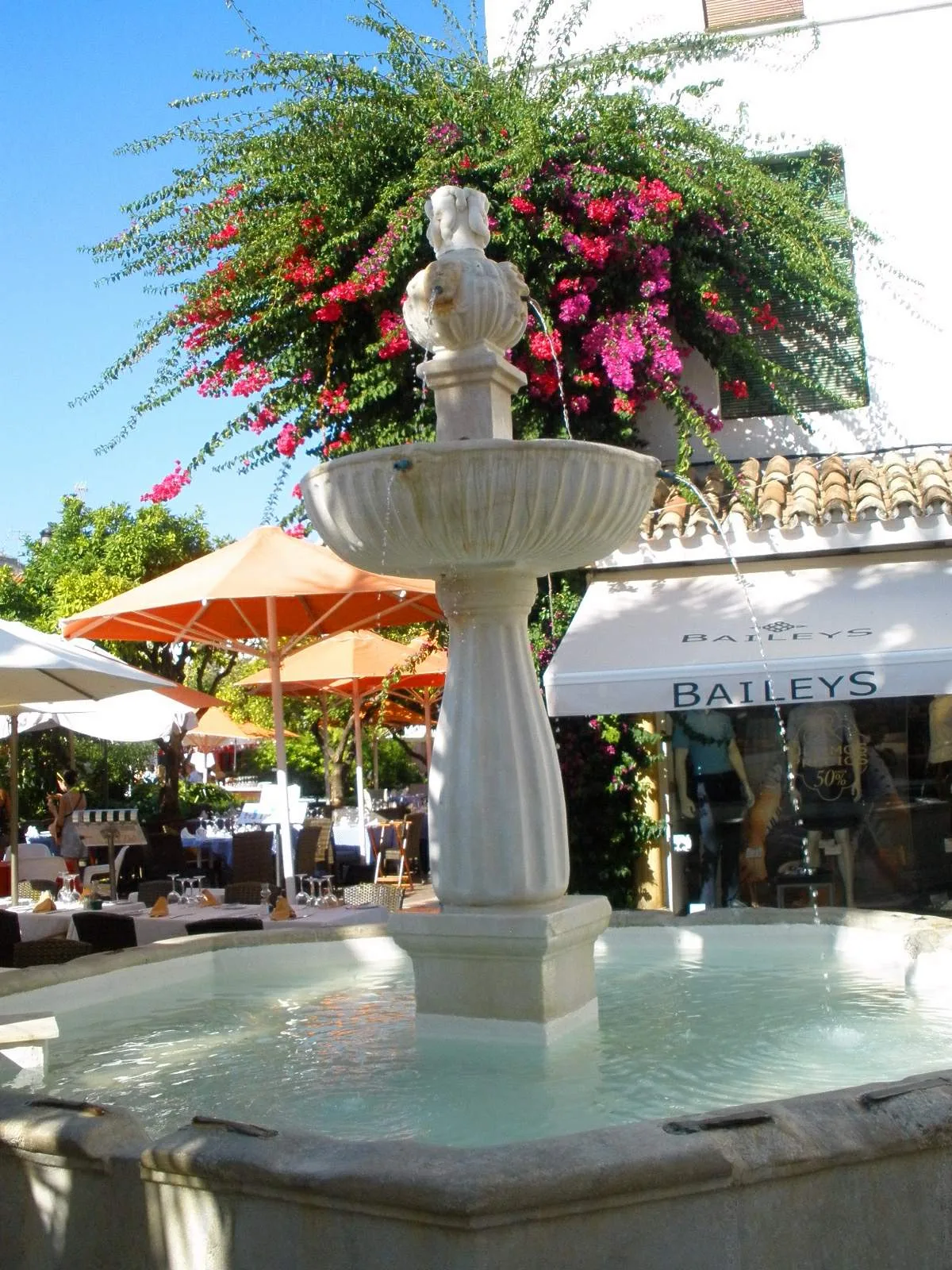
Fountain in Plaza de los Naranjos, Marbella Old Town, archive 17 May 2020. Zarateman · CC0 · Resized and re-encoded to WebP; display may crop; derivative available under the same licence where share-alike applies.
Top 10 Things to Do in Marbella
Guide to Marbella · 6 August 2026
In this guide
The ten essentials are Plaza de los Naranjos, Avenida del Mar's Dalí sculptures, a La Concha hike, a catamaran cruise, Puerto Banús, a regional Málaga hammam trip, the Golf Valley, the Saturday Puerto Banús market, a beach club day and an old-town tapas crawl.
Marbella packs Mediterranean beaches, rugged coastal mountain peaks, and one of Andalusia's best-preserved historic quarters into a 27-kilometre stretch of coastline. Home to a resident population of roughly 156,000 people across 140 nationalities according to the Instituto Nacional de Estadística (INE), the municipality balances quiet whitewashed alleys with world-renowned marinas.
Whether you are visiting for a weekend or spending the season along the Costa del Sol, these are the essential things to do in Marbella.
| District / Attraction | Distance from Old Town | Recommended Time | Target Experience | Entry / Access Cost |
|---|---|---|---|---|
| Casco Antiguo (Old Town) | 0 km | 2–3 hours | 15th-century architecture, independent boutiques | Free |
| Avenida del Mar & Alameda | 0.4 km (5-min walk) | 45 minutes | Salvador Dalí bronze sculptures, botanical gardens | Free |
| La Concha Summit | 12 km (to Refugio de Juanar) | 5–6 hours | High-altitude mountain hiking (1,215 m elevation) | Free |
| Puerto Banús Marina | 6.5 km (west) | 2–4 hours | Superyachts, luxury shopping, waterfront dining | Free |
| Dunas de Artola (Cabopino) | 13.5 km (east) | Half day | Protected wooden boardwalk trail and natural dunes | Free |
| Museo Ralli | 4.8 km (west) | 1–2 hours | Contemporary European and Latin American art | Free |
---
1. Wander Plaza de los Naranjos and the Casco Antiguo
The 15th-century orange-tree square is the centre of Marbella's Old Town (Casco Antiguo). Laid out following the Christian reconquest in 1485, the square features the 1568 Town Hall (Ayuntamiento), the historic Magistrate’s House (Casa del Corregidor), and the Chapel of Santiago—the oldest religious building in town, dating to the late 15th century.
Wander past the remnants of the 9th-century Moorish castle walls (Murallas del Castillo) along Calle Carmen and Calle Arte, where whitewashed walls are flanked by bougainvillea and traditional iron rejas. To discover nearby tapas taverns, browse our guide on Where to Eat in Marbella: Our Local Favourites.
2. Walk Avenida del Mar and Parque de la Alameda
Located just 300 metres south of Plaza de los Naranjos, Parque de la Alameda is an 18th-century green lung filled with lush Ficus trees, marble pathways, and traditional Andalusian tiled benches.
Connecting Alameda Park directly to the sea promenade is Avenida del Mar, an open-air pedestrian concourse paved in polished granite. The avenue showcases a permanent collection of ten original bronze sculptures cast by Salvador Dalí, including depictions of Perseus holding the head of Medusa and Mercury on a plinth.
3. Hike La Concha Mountain Peak
Rising to 1,215 metres above sea level directly behind the town, La Concha is the crowning peak of the Sierra Blanca range. The classic hiking route begins at the Refugio de Juanar trailhead near Ojén, located a 15-minute drive (12 km) north of Marbella.
The 13.5-kilometre return hike takes roughly 5 to 6 hours to complete. It traverses olive groves, pine forests, and rocky ridgelines before reaching the summit spine, offering panoramic 360-degree views across the Strait of Gibraltar, the Rock of Gibraltar, and the North African coastline. Ensure you carry at least 2 litres of water per person and check mountain weather reports with AEMET before departing.
4. Explore Puerto Banús Marina
Inaugurated in May 1970 by developer José Banús, this protected marina is one of Europe's most famous yachting harbours, providing 915 berths for vessels up to 50 metres in length.
Stroll along Muelle de Ribera to view superyachts, supercars, and high-fashion boutiques, or stop at an open-air café overlooking the marina basin. For full details on berths, shops, and heritage, consult our Puerto Banús: The Complete Guide.
5. Walk or Cycle the Paseo Marítimo
Marbella's sea promenade stretches uninterrupted for over 12 kilometres along the coast, forming part of the province-wide Senda Litoral de Málaga coastal footpath project detailed by Diputación de Málaga.
The flat, tiled, and wooden-boardwalk path connects central Marbella to Puerto Banús and San Pedro de Alcántara. Rent a cruiser bicycle from the marina or walk the 6.5-kilometre section between Marbella port and Puerto Banús, passing beachfront chiringuitos, palm-lined public parks, and pristine shores.
6. Visit the Roman Villa of Río Verde
Dating from the late 1st century AD, the Villa Romana de Río Verde lies near the mouth of the Río Verde river between the Golden Mile and Puerto Banús.
Preserved under the auspices of the Junta de Andalucía, the excavated residence features remarkable polychrome floor mosaics displaying culinary scenes, livestock, amphorae, and a rare depiction of the Gorgon Medusa. Access is available during scheduled morning openings on weekends and bank holidays.
7. Relax Along the Golden Mile Beaches
Marbella boasts 27 kilometres of coastline divided across 24 distinct beaches. The iconic Golden Mile stretch, running between the historic centre and Puerto Banús, features Playa de Casablanca, Playa de la Fontanilla, and Playa de Nagüeles.
These beaches offer fine golden sand, gentle gradients ideal for swimming, and full lifeguard amenities from June to September. Discover the best stretches of coastline across the municipality in our guide to The Best Beaches in Marbella.
8. Tour the Museo Ralli Marbella
Situated in the Coral Beach estate along the Golden Mile, Museo Ralli Marbella is one of five institutions worldwide founded by the Harry Recanati Foundation.
The museum houses one of Europe's most significant collections of contemporary Latin American art, alongside European works by masters including Salvador Dalí, Joan Miró, Marc Chagall, and Giorgio de Chirico. Entry is free to the public from Tuesday to Saturday between 10:00 and 15:00.
9. Stroll the Dunas de Artola and Cabopino Harbour
Situated 13.5 kilometres east of Marbella centre, the Dunas de Artola (Artola Dunes) is a protected Natural Monument preserving the last intact coastal dune system in the municipality.
An elevated wooden boardwalk loops for 1.2 kilometres through maritime pine trees and juniper shrubs, leading to the 16th-century Torre Ladrones defensive watchtower. The path terminates at Cabopino beach and its adjoining small marina, known for quiet waters and uncrowded boardwalk restaurants.
10. Shop the Mercado Municipal de Marbella
Located on Calle Doña Erminda at the edge of the historic quarter, the Mercado Municipal is where local residents and restaurateurs source daily produce.
Open Monday to Saturday from 08:00 to 15:00, the market's two dozen stalls offer fresh seafood landed daily at the fishing port (La Bajadilla), seasonal fruits from the Guadalhorce Valley, cured Iberian hams, and regional cheeses. The ground floor also houses unpretentious tapas bars serving fresh fried fish (pescaíto frito) and daily menús del día. For official cultural schedules and municipal event details, visit Turismo Marbella.
---
The local secret
Skip the heavy summer traffic along the N-340/A-7 dual carriageway by taking the Fly Blue blue catamaran ferry between Marbella's Puerto Deportivo and Puerto Banús. The boat runs hourly departures from April through October, takes roughly 30 minutes, and offers unobstructed views of La Concha mountain and the Golden Mile estates from the water for around €10 each way—saving you both parking fees and highway gridlock.
---
Questions people ask
How many days do you need in Marbella? Two to three full days are ideal to explore the historic Old Town, walk the Dalí sculptures on Avenida del Mar, spend an afternoon in Puerto Banús, and hike La Concha or relax on the Golden Mile beaches.
Is Marbella walkable without a car? Yes. The historic centre, Avenida del Mar, the municipal market, and the seafront promenade are entirely pedestrian-friendly. You can walk or cycle along the flat Paseo Marítimo all the way from Marbella centre to Puerto Banús (6.5 km) without interacting with road traffic.
What is the best month to visit Marbella? May, June, September, and October offer optimal weather, with daytime temperatures averaging 22°C to 27°C and far smaller crowds than July and August, when peak summer temperatures frequently reach 32°C.
Is Marbella Old Town free to visit? Yes. The Casco Antiguo is an open, living residential and commercial neighbourhood with free access around the clock. Key historic monuments, including Plaza de los Naranjos and the Murallas del Castillo ruins, can be viewed without tickets.
Related articles

Golf in Marbella: Courses and Green Fees Compared
Compare green fees and tee times across Marbella's Golf Valley, Benahavis and East Marbella, the best golf on Andalusia's Costa del Sol.
Read more about Golf in Marbella: Courses and Green Fees ComparedAloha Golf Club practice ground and clubhouse, archive 2007; not proof of current facilities. Taken 9 May 2007. Isogood · CC BY 2.0 · Resized and re-encoded to WebP; display crop may apply. No facial close-up crop.
Marbella at Christmas 2026/27: Programme Status and Booking Guide
Christmas 2026/27 in Marbella: municipal programme verification status, confirmed holidays and questions to ask before booking festive dinners.
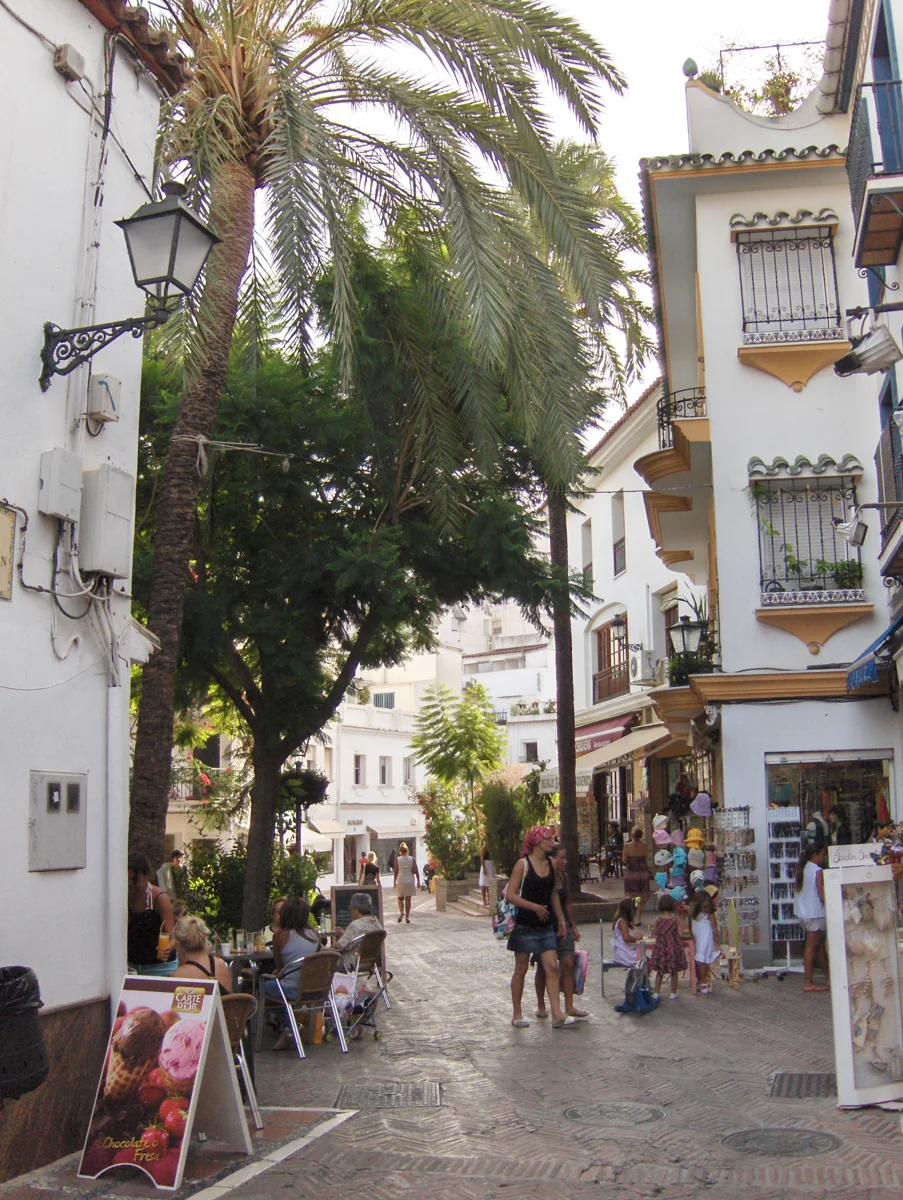
Read more about Marbella at Christmas 2026/27: Programme Status and Booking GuideMarbella Old Town street, archive September 2009; resized, display crop may apply. Tyk · CC BY-SA 3.0 · Resized and re-encoded to WebP; existing hero display may crop.
Marbella Hidden Gems Only Locals Know
Discover Marbella's best hidden gems, from Roman ruins and mountain lookouts to secluded dunes and authentic tapas quarters beyond the tourist crowds.
Read more about Marbella Hidden Gems Only Locals KnowFountain in Plaza de los Naranjos, Marbella Old Town, archive 17 May 2020. Zarateman · CC0 · Resized and re-encoded to WebP; display may crop; derivative available under the same licence where share-alike applies.