
Marbella at Christmas: Markets, Lights and Events
Guide to Marbella · 6 septembre 2026
Dans ce guide
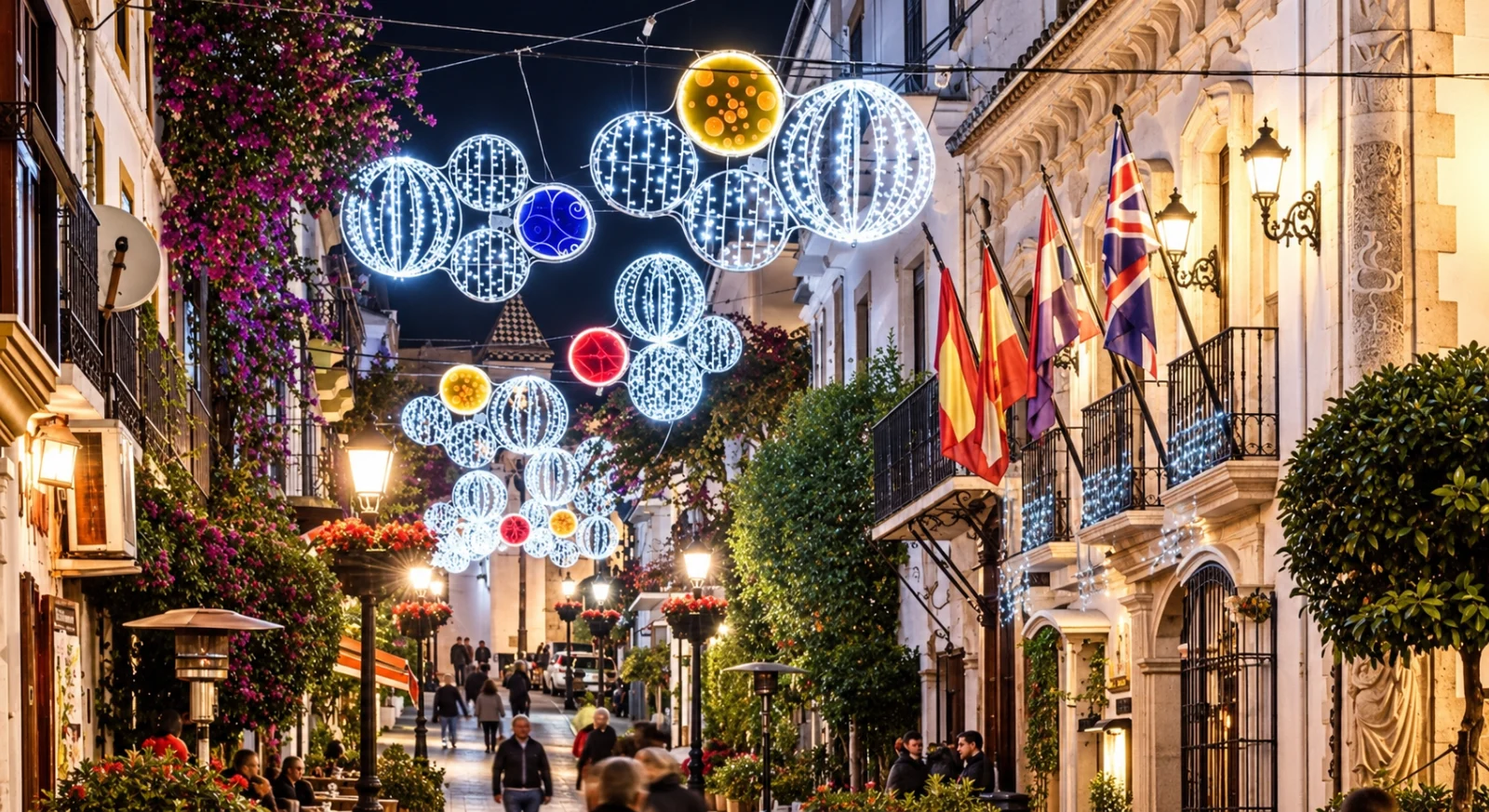
Marbella's Christmas festivities run from late November to early January, centred around atmospheric markets in the Old Town (Plaza de los Naranjos) and Puerto Banús. Visitors can browse wooden stalls selling artisan crafts, regional sweets, and decorations under illuminated palm trees, complemented by lively flamenco zambombas and traditional Three Kings parades.
The Festive Magic of a Coastal Christmas
While Northern Europe shivers under grey skies, Marbella takes a distinctly Mediterranean approach to the festive season. Christmas in this corner of Andalusia combines crisp, sunny winter afternoons with illuminated palm trees, open-air wooden market stalls, and late-night Andalusian celebrations.
According to data from AEMET (Agencia Estatal de Meteorología), Marbella records an average December daytime high of 17.5°C and over 160 hours of sunshine throughout the month, insulated by the 1,215-metre peak of La Concha. From late November through to Epiphany on 6th January, the municipal population of 156,295 residents—recorded by the INE (Instituto Nacional de Estadística)—is joined by thousands of international winter visitors.
The municipal rhythm shifts from beach club glamour to heritage charm, with traditional nativity scenes (belenes), open-air musical performances, and several distinct markets operating across the 117-square-kilometre municipality. Navigating the festive calendar requires an understanding of local timing, distinct neighbourhoods, and cultural traditions that differ markedly from standard British festivities.
| Christmas Hub | Primary Location | Distance from Old Town Centre | Operating Period | Typical Stalls & Highlights | Price Range (Gifts / Refreshments) |
|---|---|---|---|---|---|
| Marbella Casco Antiguo | Plaza de los Naranjos & Plaza de la Iglesia | 0.0 km (0 mins on foot) | Late Nov – 6 Jan | Handcrafted ceramics, turrón, roasted chestnuts, leatherwork | €3.00 – €45.00 |
| Puerto Banús Christmas Village | Plaza Antonio Banderas & Muelle de Honor | 6.8 km (12 mins by car / bus) | 1 Dec – 6 Jan | Wooden chalets, children's grotto, artisan jewellery, mulled wine | €5.00 – €120.00 |
| San Pedro de Alcántara | Calle Marqués del Duero & Boulevard | 10.2 km (15 mins by car / bus) | Early Dec – 5 Jan | Local cured cheeses, serrano ham, festive pastries, toys | €2.50 – €35.00 |
| La Virginia Pop-Up Bazaar | Urbanización La Virginia | 2.1 km (25 mins on foot / 5 mins car) | Select weekend in Dec (10:00–18:00) | Antiques, vintage homeware, artisan bakery, designer crafts | €8.00 – €250.00 |
Marbella Christmas Markets: Where to Shop
Unlike large central European markets concentrated in a single sprawling square, Marbella hosts several individual festive markets, each offering its own character, setting, and price points.
Marbella Old Town (Casco Antiguo)
The narrow, whitewashed alleys of the historic quarter form the centrepiece of festive Marbella. The main activity clusters around Plaza de los Naranjos, Plaza de la Iglesia, and the 500-metre pedestrianised spine of Calle Carmen and Calle Cabrejas.
Here, roughly 20 to 30 stalls feature handcrafted leather goods, ceramics, wooden toys, artisanal jewellery, and regional delicacies such as turrón de Jijona (soft almond nougat), polvorones (crumbly lard-and-almond shortbread), and candied citrus peel. The atmosphere is unhurried, framed by century-old citrus trees decorated with warm LED garlands and balconies adorned with festive poinsettias. If you are exploring the cobblestone core with pushchairs, consult our Marbella with Kids: A Family Guide for step-free routes through the walled perimeter.
Puerto Banús Christmas Village
For an international festive market setting, head 6.8 kilometres west along the Golden Mile to the marina. Located in Plaza Antonio Banderas, just a 3-minute stroll from the luxury yachts moored along the Muelle de Honor, the Puerto Banús Christmas Market features traditional Alpine-style wooden chalets selling gourmet treats, hand-poured candles, and woollen goods.
A central ice-skating rink or fairground carousel is typically erected for children throughout December, accompanied by Santa’s grotto until 24th December. Adults can purchase warm spiced wine (glühwein), craft beers, and Belgian waffles while browsing high-end fashion concessions. Review our complete Puerto Banús: The Complete Guide to coordinate market shopping with marina waterfront dining.
San Pedro de Alcántara
Situated 10 kilometres west of Marbella's centre, San Pedro de Alcántara hosts a community-focused market along the pedestrianised Calle Marqués del Duero and across its central 54,000-square-metre urban boulevard.
Organised under the guidance of the Ayuntamiento de Marbella, this market caters primarily to local families. Stalls sell cured Manchego cheeses, acorn-fed jamón ibérico, local honey from the Sierra de las Nieves, and handmade wooden toys. Prices here reflect local everyday Andalusian rates, making it an excellent stop for authentic food hampers.
Pop-Up Bazaars and Charity Fairs
Throughout late November and early December, Marbella hosts several curated pop-up markets. The most famous is the La Virginia Christmas Bazaar, held within the cobbled, village-style private community of La Virginia. For a single weekend, around 40 resident-run stalls set up along the narrow lanes, selling home-baked mince pies, bespoke ceramics, antique silver, and hand-embroidered linens.
Festive Lights and Seasonal Landmarks
Marbella’s municipal Christmas illuminations (el alumbrado navideño) cover more than 50 streets, roundabouts, and public parks with energy-efficient LED displays. Switched on in late November or the first week of December, the lights remain active nightly between 18:30 and 00:00 (extended until 02:00 on festive eves).
Key illumination zones include:
- Avenida Ramón y Cajal and Avenida Ricardo Soriano: A continuous 2.5-kilometre illuminated canopy extending over the main thoroughfare.
- Parque de la Alameda: The 18th-century botanical garden features illuminated pathways, illuminated central fountains, and kiosks serving hot chocolate and roasted chestnuts.
- Avenida del Mar: The 150-metre marble promenade connecting Alameda park to the Mediterranean shoreline is dressed with illuminated archways framing the permanent bronze sculptures designed by Salvador Dalí.
- Plaza de los Naranjos: Warm, golden fairy lights draped across the orange trees complement the 16th-century Town Hall (Casa Consistorial) and the historic Hermitage of Santiago.
Andalusian Christmas Traditions to Experience
Experiencing Christmas in Marbella offers direct insight into regional customs detailed on Spain's official tourism portal.
Zambombas
Originating in the flamenco heartlands of Jerez and Arcos de la Frontera, the zambomba is an impromptu gathering where neighbours, flamenco musicians, and families sing traditional carols (villancicos) around an open brazier. Accompanied by Spanish guitars, tambourines, and the friction drum (zambomba), these gatherings take place across Old Town plazas such as Plaza Santo Cristo and Plaza de la Iglesia on weekend evenings in December.
The Nativity Trail (Ruta de Belenes)
Detailed nativity scenes are a focal point of Spanish festive culture. The municipal Belén Municipal, commissioned annually by the Delegación de Fiestas de Marbella, spans several dozen square metres and depicts biblical landscapes with running water, miniature working windmills, and hand-painted terracotta figures. You can visit the municipal display in the Alameda Park exhibition hall or view the heritage nativity inside the 16th-century Iglesia de Nuestra Señora de la Encarnación.
The Three Kings Parade (Cabalgata de Reyes)
In Spain, the gift-giving season peaks on the evening of 5th January with the arrival of the Three Wise Men (Los Reyes Magos).
The Marbella Cabalgata features 10 to 15 decorated floats carrying Melchior, Caspar, and Balthazar along a 2-kilometre route through Avenida Severo Ochoa, Avenida Ramón y Cajal, and Avenida Ricardo Soriano. Costumed attendants throw upwards of 5,000 kilograms of wrapped, gluten-free sweets into crowds numbering more than 25,000 spectators. On the morning of 6th January (Epiphany), families slice the Roscón de Reyes—a round brioche pastry topped with candied fruits and filled with sweet cream, concealing a ceramic token and a dry fava bean.
What to Eat and Drink
Festive dining in Marbella combines rich winter stews with fresh seafood from the Costa del Sol fishing fleet. If you are reserving tables for the festive period, refer to our curated directory on Where to Eat in Marbella: Our Local Favourites.
During market visits, sample these seasonal staples:
- Churros con Chocolate: Fluted sticks of fried dough served with thick drinking chocolate. Churrería Ramón in Plaza de los Naranjos has operated for over sixty years, serving circular tejeringos fried in olive oil.
- Castañas Asadas: Corner vendors roast sweet chestnuts over perforated steel drums filled with hot coals, serving them in rolled paper cones (cucuruchos) for around €2.50 to €3.50 per dozen.
- Marisco Fresco: Fresh prawns, langoustines, and gambas al pil-pil (prawns flash-fried in garlic, chilli, and olive oil) form the core of traditional Nochebuena (Christmas Eve) dining.
- Vino Dulce de Málaga: Fortified, naturally sweet wines made from Moscatel and Pedro Ximénez grapes harvested in the neighbouring Axarquía hills, paired with crumbly mantecados.
The local secret
While tens of thousands gather along Avenida Ricardo Soriano on the evening of 5th January to see the Three Kings Parade, few visitors realise that the Three Wise Men actually make their official landfall hours earlier. At approximately 12:00 midday on 5th January, Melchior, Caspar, and Balthazar arrive by catamaran directly at the Puerto Deportivo Virgen del Carmen marina. Bringing children to the marina pontoon at noon offers an intimate, up-close view of the Kings and their royal pages stepping ashore, avoiding the chaotic evening crush on the main avenue.
Practical Planning and What to Avoid
Weather and Clothing
Daytime coastal temperatures typically hold at 17°C to 18°C from late November to early January, falling to between 8°C and 11°C after sunset. A light wool jacket, scarf, and sunglasses are recommended for daytime strolls, with heavier outerwear required once market temperatures drop after 18:00. December brings an average of 5 rainy days, meaning wet-weather contingencies are rarely needed for more than 48 consecutive hours.
Opening Times and Bank Holidays
Spain observes strict public holiday closures. Plan for reduced transport and total retail shutdowns on the following dates:
- 6th December: Constitution Day (Día de la Constitución)
- 8th December: Immaculate Conception (Inmaculada Concepción)
- 25th December: Christmas Day (Navidad)
- 1st January: New Year’s Day (Año Nuevo)
- 6th January: Epiphany (Día de Reyes)
While independent boutiques and large supermarkets close on these dates, many hotel restaurants and beachfront chiringuitos open with fixed festive menus (menú de degustación), which must be booked 2 to 4 weeks in advance.
Transport and Parking Mistakes
Driving into Marbella Old Town between 18:00 and 21:00 on festive December weekends leads to significant traffic delays along the N-340/Avenida Ricardo Soriano corridor.
Do not attempt street parking in the historic centre. Head directly to the underground car parks: Parking Avenida del Mar (accessible via Calle El Fuerte) or Parking Mercado Municipal (Plaza de la Victoria). Both charge approximately €2.10 to €2.80 per hour and place you within 150 metres of the Old Town market stalls. Alternatively, take the L-1 municipal bus or the Avanza intercity bus line linking San Pedro, Puerto Banús, and Marbella centre.
Questions people ask
When do the Christmas lights turn on in Marbella? The municipal light switch-on (el alumbrado) takes place in late November or the first Friday of December, with displays illuminated every evening from 18:30 until the conclusion of Epiphany on 6th January.
Is Marbella busy during the Christmas holidays? The town is moderately active. While summer crowds have dispersed, the Old Town and Puerto Banús see high footfall from local Andalusian families and winter residents, particularly during weekend evenings and the Spanish long weekend (puente) from 6th to 8th December.
Are restaurants open in Marbella on Christmas Day? Yes. A significant selection of international venues, beachfront restaurants, and luxury hotel dining rooms open on 25th December, though advance reservations for set festive menus are mandatory.
Where is the main Christmas market located in Marbella? The primary open-air markets operate in the Old Town (Plaza de los Naranjos and surrounding streets), the Puerto Banús Christmas Village in Plaza Antonio Banderas, and the community market along Calle Marqués del Duero in San Pedro de Alcántara.
What is the weather like in Marbella at Christmas? Marbella experiences mild, bright winter conditions, with daytime highs averaging 17°C to 18°C and around 5 to 6 hours of daily sunshine. Night-time temperatures fall to between 8°C and 11°C, requiring warm evening layers.
Articles liés
Top 10 Things to Do in Marbella
Must-see places and unique experiences in Marbella, from the old town to La Concha and Puerto Banús.
En savoir plus sur Top 10 Things to Do in MarbellaMarbella with Kids: A Family Guide
Beaches, parks and activities that work for families visiting Marbella.
En savoir plus sur Marbella with Kids: A Family GuideWhat's On in Marbella in May
Events, weather and things to do in Marbella this May.
En savoir plus sur What's On in Marbella in May