Where to Eat the Best Paella in Marbella: From Rustic Chiringuitos to Golden Mile Arrocerías
Guide to Marbella · 6 September 2026
In this guide
Marbella offers exceptional paella, particularly in the traditional beachfront chiringuitos along the eastern beaches of Elviria and Las Chapas, as well as specialised arrocerías in the town centre and San Pedro. Authentic establishments always prepare paella fresh to order for a minimum of two diners, making long, leisurely lunchtime meals the premier way to experience authentic Andalusian rice.
# Where to Eat the Best Paella in Marbella: From Rustic Chiringuitos to Golden Mile Arrocerías
Finding authentic paella in a bustling coastal resort can feel like navigating a culinary minefield. As one of Andalusia's most visited coastal municipalities, Marbella spans 117 square kilometres of coastline and foothills, home to an official municipal population of over 156,000 registered residents according to the Instituto Nacional de Estadística (INE), swollen by hundreds of thousands of seasonal visitors. While international fine dining and glamorous beach clubs dominate the headlines, genuine, wood-fired, and slow-simmered rice remains the true soul of coastal dining along this 27-kilometre shoreline.
To eat well in Marbella, one must understand how locals approach rice. In Spain, paella is not a generic, yellow-tinted side dish served at any hour from a warming tray. It is a celebratory lunchtime ritual, cooked slowly to order in a wide, shallow steel pan (caldero), and shared straight from the centre of the table. Whether you are seeking a salt-crusted seafood rice right on the sand or a refined arroz negro overlooking the Golden Mile, this guide highlights where to find the best paella in Marbella, how to order it properly, and which tourist traps to avoid.
Understanding Marbella's Rice Culture
While traditional paella originated in the Albufera wetlands of Valencia with rabbit, chicken, and green beans, Andalusia has crafted its own formidable maritime rice tradition, supported by the country's broader gastronomy promoted by Spain.info. In Marbella, menus rarely stop at a single "paella"; instead, you will encounter broad categories of arroces (rice dishes).
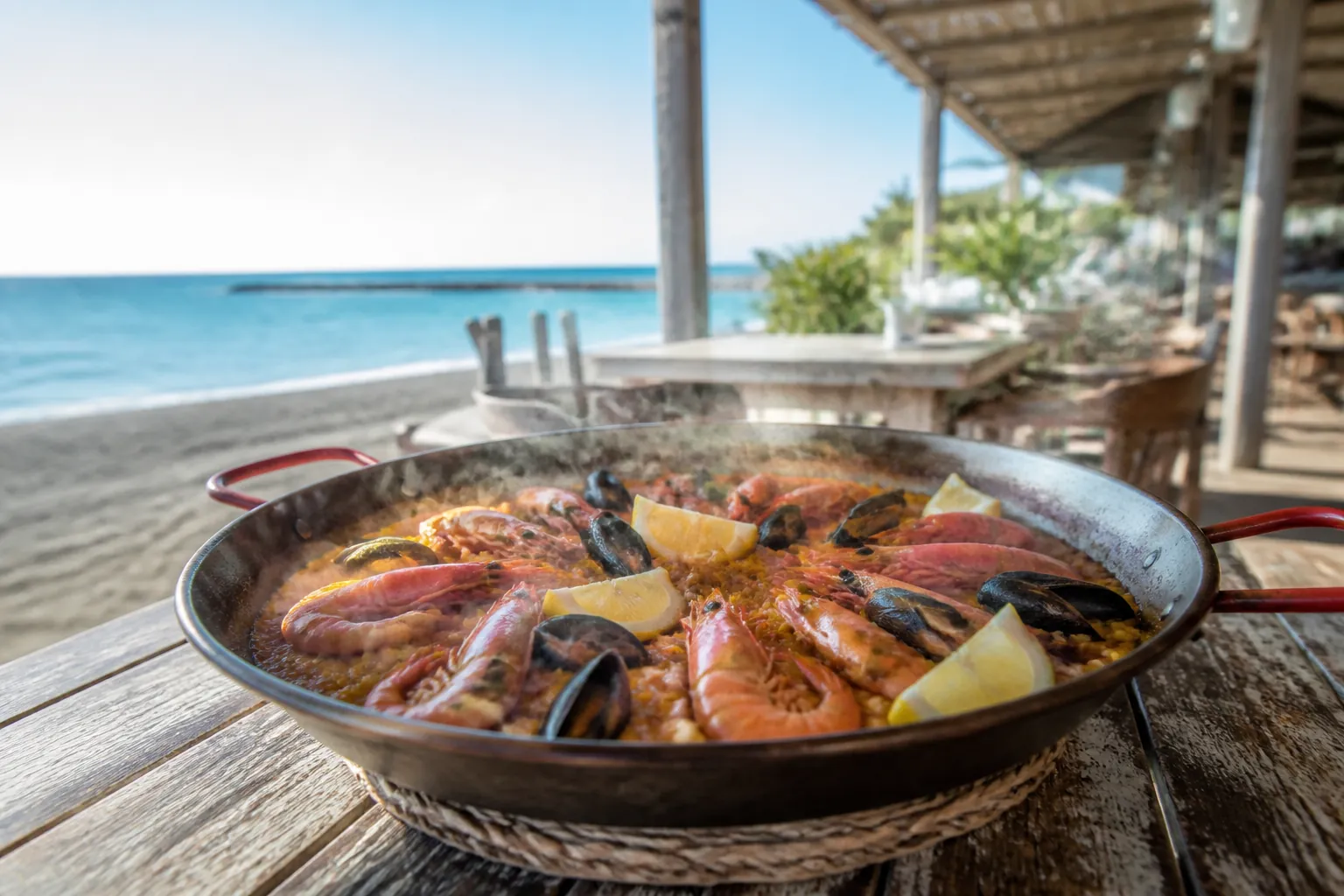
The gold standard along the Costa del Sol is arroz a banda (rice cooked in intensely reduced rockfish stock, served with hand-whipped aioli) and paella de marisco (rich with Mediterranean red prawns, cuttlefish, mussels, and clams). You will also frequently see arroz caldoso (a soupy, stew-like rice cooked in deep earthenware vessels, often loaded with native blue lobster or spider crab) and arroz meloso (unctuous, creamy rice with a texture midway between risotto and soup).
When exploring where to eat in Marbella: our local favourites, knowing when and how to eat rice is essential. Spaniards almost exclusively consume paella at lunch (between 14:00 and 16:30). Heavy carbohydrates late in the evening are generally avoided, and many of the finest traditional rice kitchens extinguish their paella burners by 17:00.
| Coastal Dining Zone | Signature Rice Dishes | Price Range (per person) | Distance from Marbella Old Town | Climate Context (AEMET) | Typical Venue Style & Capacity |
|---|---|---|---|---|---|
| East Coast Dunes (Los Monteros to Cabopino) | Arroz a banda, Arroz negro, Arroz con bogavante | €18 – €34 | 6.5 km to 14 km east | May–Oct: 24°C–31°C average daytime high | Open-air dune chiringuitos, 90–160 covers |
| Town Centre & Golden Mile (Paseo to Nagüeles) | Paella de marisco, Arroz de carabineros | €24 – €48 | 0.5 km to 3.5 km west | June–Sept: 28°C–31°C average daytime high | Linen-service arrocerías & upscale beachfronts, 110–220 covers |
| San Pedro & Linda Vista (Cortijo Blanco to Guadalmina) | Arroz caldoso marinero, Paella de la casa | €17 – €38 | 10.5 km to 13 km west | May–Oct: 23°C–30°C average daytime high | Traditional family fish houses, 80–180 covers |
The East Coast: Dune Chiringuitos and Seafood Specialists
The eastern edge of Marbella—stretching from Río Real through El Rosario, Elviria, and Cabopino—boasts the municipality's finest natural sand dunes and some of its most venerated beachfront restaurants. For true rice aficionados, this stretch is the undisputed heartland.
Chiringuito Los Sardinales (Playa Los Monteros)
Tucked beside the dunes of Playa Los Monteros, 6.5 kilometres east of Marbella's historic centre, Los Sardinales is an enduring favourite among discerning locals and resident families. The atmosphere is unpretentious, characterised by white-painted timber, pine shade, and the unmistakable aroma of olive oil and sea salt.
- The Rice: Their paella de marisco delivers pure, unadorned coastal flavour without heavy commercial bouillon. The grains of Spanish Bomba rice remain distinct, tender, and properly infused with fish stock (fumet). Their arroz con bogavante (lobster rice) is equally revered.
- Who it suits: Families, couples, and long-table gatherings who want authentic seaside dining away from loud DJ sets.
- Practicalities: Open primarily for lunch year-round, with dinner service during the peak summer months. The ~120-seat dining area and residential parking along Calle Los Sardinales fill rapidly by 13:30 between June and September; arrive early or take a 10-minute taxi from town.
Restaurante El Laurel (Playa de las Cañas, Cabopino)
Located right beside the protected Artola Dunes—designated a Natural Monument by the Junta de Andalucía—El Laurel pairs sweeping Mediterranean views with disciplined kitchen execution 13.5 kilometres east of central Marbella. While the best beaches in Marbella provide plenty of scenic dining, El Laurel stands out for its uncompromising pan technique.
- The Rice: The kitchen takes pride in producing an authentic socarrat—the prized, deeply caramelised crust of rice clinging to the bottom of the pan. Order the arroz negro (black rice coloured with cuttlefish ink), served alongside a sharp, hand-emulsified garlic alioli.
- Who it suits: Walkers exploring the coastal wooden boardwalk (Senda Litoral) and diners looking for relaxed, barefoot-luxury vibes.
- Practicalities: Advance booking is non-negotiable on weekends from April through October. Rice orders require a minimum 25- to 30-minute wait while freshly prepared from scratch.
Marbella Centre and the Golden Mile
If you prefer staying closer to town or dining in a polished setting, Marbella town centre and the Golden Mile offer high-end arrocerías alongside long-standing fishermen's institutions documented by the local tourism board, Turismo Marbella.
Los Mellizos Marbella (Paseo Marítimo)
Part of a storied fishmonger dynasty from Málaga province, Los Mellizos operates right on Marbella's seafront promenade, a pleasant 600-metre walk from the Parque de la Alameda. Because the company operates its own wholesale seafood distribution, their raw product is consistently among the freshest in the area.
- The Rice: Their paella mixta (chicken and seafood) and arroz a banda are benchmark representations of Costa del Sol dining. The stock is rich, reddish-gold from sweet pimentón and saffron, and the seafood toppings are generous.
- Who it suits: Those who want a dependable, professional dining room with linen tablecloths, formal service, and direct promenade views.
- Practicalities: Unlike rustic beach shacks, Los Mellizos operates standard commercial restaurant hours and maintains ample indoor, air-conditioned seating across its 180-capacity venue for hot midsummer afternoons.
La Milla Marbella (Playa de Nagüeles)
Situated directly on the Golden Mile, approximately 3.2 kilometres west of central Marbella, La Milla has redefined beachfront gastronomy along this coast. Helmed by chef Luis Miguel Menor, it is not a casual beach bar, but a destination restaurant dedicated to modern seafood craft.
- The Rice: La Milla approaches rice with rigorous technique. Their dry arroces are cooked with hyper-concentrated stocks made from rockfish and deep-sea red prawns (carabineros), resulting in extraordinary depth of flavour and razor-thin layers of rice in broad steel pans.
- Who it suits: Discerning food lovers, wine collectors (their cellar houses over 800 references), and celebratory lunches.
- Practicalities: Premium pricing reflective of the Golden Mile setting, with rice dishes averaging €34 to €48 per person. Reservations frequently need to be secured two to three weeks ahead for July and August dates.
Westward: Puerto Banús and San Pedro Alcántara
Heading west past Puerto Banús: the complete guide, the culinary landscape shifts toward the tranquil promenade of San Pedro Alcántara and the historic coastal enclave of Cortijo Blanco.
Restaurante El Ancla (San Pedro Alcántara)
Perched over the Mediterranean at the western end of the San Pedro promenade, 11 kilometres west of Marbella centre, El Ancla is an established culinary landmark renowned for its saltwater swimming pool, crisp nautical aesthetics, and peerless seafood counter.
- The Rice: The arroz caldoso marinero here is legendary among multi-generational summer visitors. Served in large ceramic tureens, it is packed with prawns, clams, and firm white rockfish, delivering a deeply comforting, oceanic broth.
- Who it suits: Long, leisurely afternoon lunches that effortlessly blend into sundowners by the sea.
- Practicalities: Price point is in the upper tier (€28–€42 per portion for specialty shellfish rices). The restaurant accommodates around 160 guests, and valet parking operates during peak summer months.
Chiringuito Guayaba Beach (San Pedro / Linda Vista)
For a return to down-to-earth coastal hospitality, Guayaba Beach—located 12 kilometres west of town along Linda Vista Baja—offers plastic chairs on the sand, canvas shade sails, and unpretentious open-flame cooking. It remains one of the few spots where you can watch espetos (sardines skewered on cane reeds over olive-wood coals) grilling directly beside bubbling pans of paella.
- The Rice: Straightforward, deeply satisfying paella de la casa, featuring seasonal seafood, tender calamari, and a well-seasoned sofrito base.
- Who it suits: Families with young children, casual diners, and those looking to eat well without formal dress codes.
- Practicalities: Cash and card accepted; the 90-seat terrace fills with multi-generational local families by 14:00 every Saturday and Sunday.
What to Look For: Identifying Real Paella
To ensure your rice experience in Marbella is memorable for the right reasons, keep these culinary checkpoints in mind:
- Cooked to Order: Authentic paella cannot be kept warm under heat lamps. It requires 20 to 30 minutes to cook from the moment you place the order. If a restaurant brings your paella out in under ten minutes, it has been pre-cooked and reheated.
- Minimum Two Diners: Because paella pans require specific surface-area-to-liquid ratios for proper evaporation, virtually all reputable kitchens enforce a minimum order of two portions (mínimo dos personas) per rice variety.
- The Depth of the Rice: Good paella seca is remarkably thin in the pan—ideally no thicker than 1 to 1.5 centimetres. This thinness ensures even grain expansion, rapid broth evaporation, and the formation of socarrat.
- Natural Colour: True paella takes its golden-brown tint from saffron, concentrated fish heads, and caramelised tomatoes and peppers (sofrito). Avoid establishments serving fluorescent yellow rice, which relies on industrial yellow food colouring (tartrazina/colorante).
The local secret
When booking a table at traditional frontline chiringuitos like Los Sardinales or El Laurel, phone ahead not just for the table, but to specify your rice order (encargar el arroz) for a set time (e.g., "Mesa para cuatro a las 14:30, con arroz a banda para cuatro"). Kitchens prepare their daily fumet (fish reduction) in single morning batches; calling your rice in advance guarantees you get the first, richest extraction of the stock before service peaks, eliminates the standard 30-minute wait at the table, and allows the arrocero (rice chef) to dedicate an entire burner to your pan before the kitchen becomes overwhelmed.
Essential Etiquette and Tips
- Timing Your Meal: Arrive around 13:30 or 14:00. Order a starter of boquerones fritos (fried local anchovies), gambas al pil-pil (sizzling garlic prawns), or a tomato and ventresca salad while your rice cooks from scratch.
- The Spoon vs. Fork Debate: While formal dining rooms provide silverware, eating rice directly from the steel pan with a spoon is entirely standard practice when sharing casually among family and close friends.
- Lemon Juice: While a fresh lemon wedge is almost always provided on the side, taste the rice first. A high-quality paella cooked with an intensely reduced stock needs no acidic masking; use lemon sparingly so as not to overpower the saffron and shellfish.
- Seasonality: High summer (July and August) brings peak heat and demands early reservations. However, May, June, September, and October offer milder midday temperatures (typically 23°C to 26°C) and unhurried kitchen staff, consistently producing the finest paellas of the season.
Questions people ask
How much does paella cost in Marbella? Paella is almost universally priced per person, ranging from €17 to €25 per portion in traditional chiringuitos and standard town restaurants. High-end establishments on the Golden Mile or specialty lobster rices (arroz con bogavante or carabineros) generally range between €28 and €48 per person. Always check whether the menu price is per portion or for the whole pan.
Can you get paella for one person in Marbella? Most traditional restaurants require a minimum order of two people for freshly made paella because of standard pan dimensions. However, a few casual tapas bars in the Old Town prepare a single communal pan around 14:00 and sell individual portions (raciones) at the bar until it runs out, though quality is invariably higher when cooked to order for two or more.
Is paella eaten for lunch or dinner in Spain? Locals almost exclusively eat paella at lunchtime, between 14:00 and 16:30. Because rice dishes are heavy and slow to digest, traditional coastal kitchens extinguish their paella burners by late afternoon, shifting their evening service entirely toward grilled fish, skewered meats, and light tapas.
What is the difference between paella and arroz a banda? Traditional seafood paella features visible pieces of fish, squid, prawns, and shellfish simmered directly on top of the rice. In contrast, arroz a banda translates to 'rice on the side'; the grains are cooked in an intensely reduced broth made from rockfish (morralla), served flat with minimal garnish and accompanied by a side of garlic alioli.
Do I need to book in advance for paella restaurants in Marbella? Yes, particularly for weekend lunches year-round and daily throughout the peak season from June to September. For popular beachfront venues in Elviria, Los Monteros, and San Pedro Alcántara, reserving a table three to seven days in advance is strongly advised.